The Heart of Influencer Marketing: Comprehensive Analysis and Strategies Powered by Hyperiser Data

In today’s digital landscape, influencer marketing plays a critical role in helping brands connect with their target audiences and strengthen their visibility. However, identifying the right strategy in this dynamic ecosystem depends on making data-driven decisions. At this point, Hyperiser emerges as a powerful influencer analytics platform, serving as a strategic compass for brands and marketing professionals.
Up-to-date insights derived from the Hyperiser Universe clearly reveal sharp strategic distinctions across industries and highlight the evolving dynamics of the influencer marketing landscape. In this article, we examine visibility tactics, content intensity, and the dominant players across sectors based on Q3 2025 (July–September) data.
Brands’ Adoption of Influencer Marketing: Market Overview and Participation
One of the clearest indicators of investment in influencer marketing tools and the ecosystem itself is brand participation. During Q3, 63% of the 2,843 brands registered on Hyperiser were actively communicating through influencer channels. In other words, nearly two out of every three brands actively leveraged influencer marketing during this period.
As a result of this high level of engagement, influencers shared a total of 247.5K brand-tagged posts throughout Q3, clearly demonstrating the market’s momentum and scale.
Industry Breakdown: Leading Sectors in Influencer Marketing
The distribution of brand-tagged content by sector highlights the following leaders:
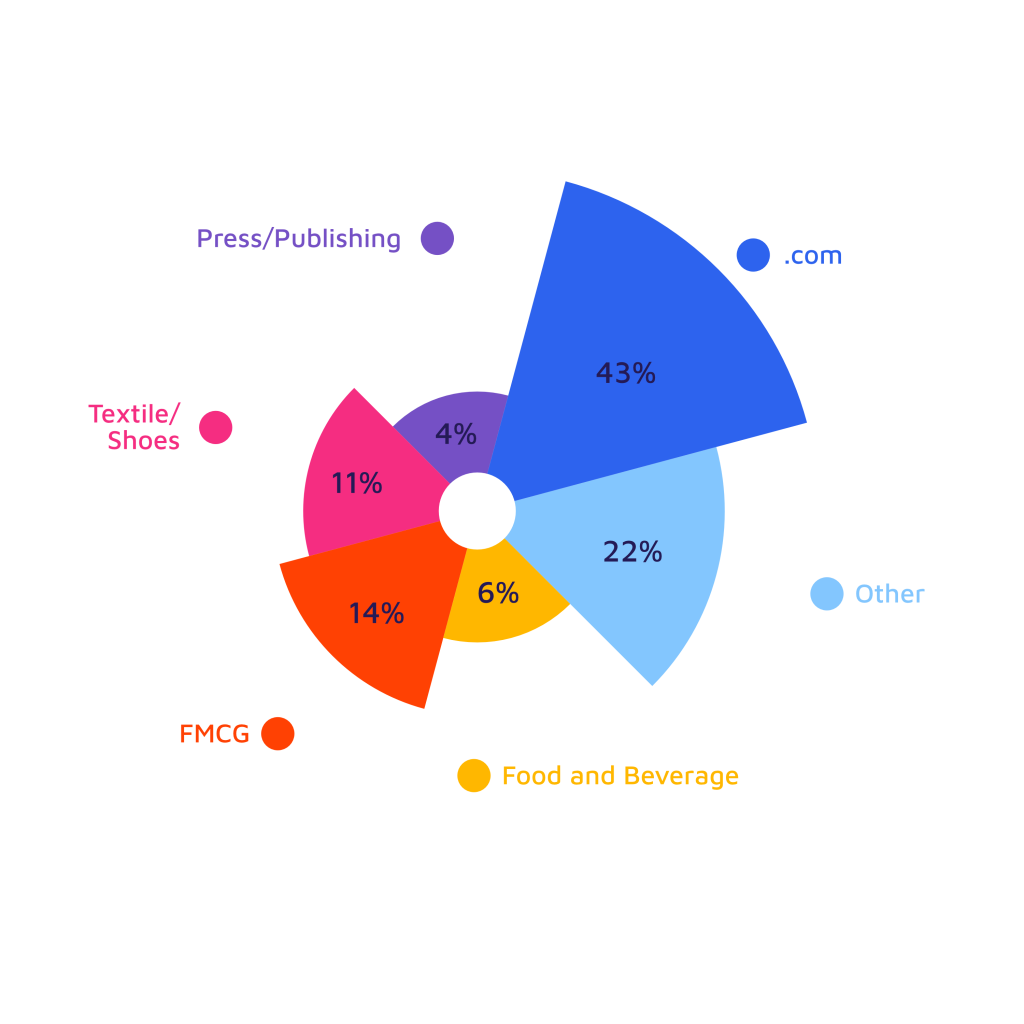
- .com brands (e-commerce and digital platforms): 43%
- FMCG (Fast-Moving Consumer Goods): 14%
- Textile / Footwear (Fashion & Apparel): 11%
This breakdown clearly shows that .com brands continue to be the most attractive collaboration partners for influencers, driven by their digital-first nature and extensive product offerings.
Diverging Visibility Strategies Across Industries: Frequency vs. Reach
One of the key advantages of campaign-level analysis is the ability to identify how different industries pursue visibility through distinct tactics. Hyperiser data reveals a clear strategic divergence between FMCG and .com brands:
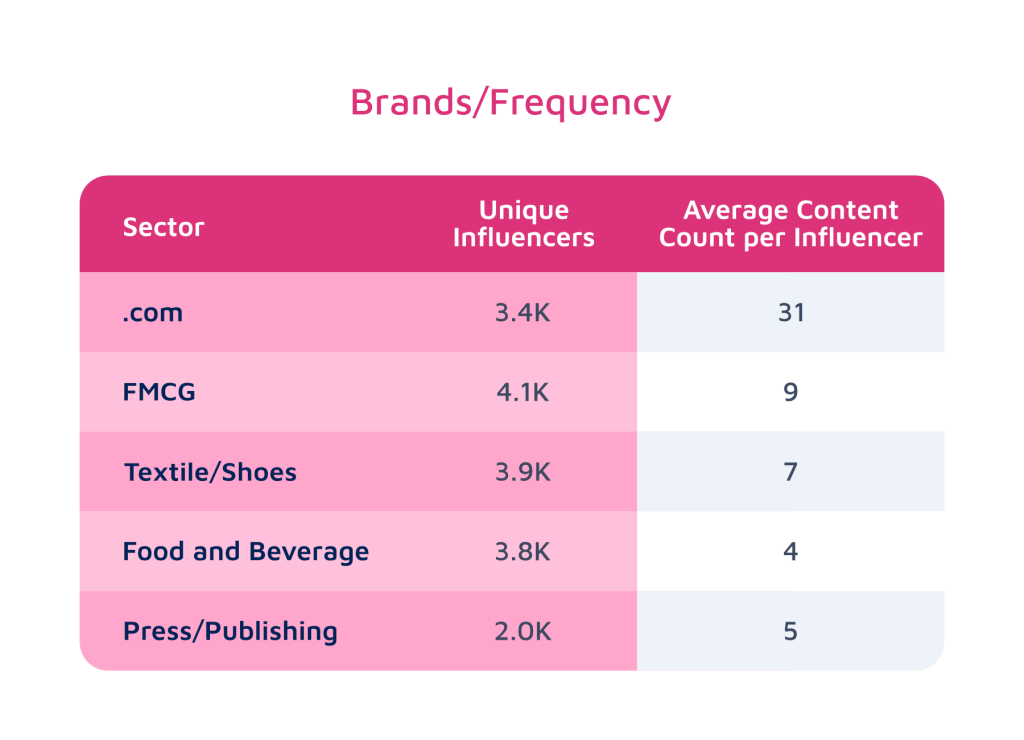
- FMCG brands achieve widespread visibility through broad influencer networks, typically with lower posting frequency per influencer. This approach is particularly effective for maximizing reach and strengthening brand awareness across large audiences.
- .com brands, on the other hand, focus on higher posting frequency with a relatively smaller pool of influencers, prioritizing sustained visibility and performance-driven communication.
This contrast highlights how brands tailor their influencer strategies based on their objectives and confirms that there is no single “correct” approach—success is shaped by brand dynamics and strategic intent.
Top Advertisers: Most Frequently Tagged Brands
Q3 data shows that brand-tagged content was largely dominated by major e-commerce players. One standout insight is that approximately 40% of all brand-tagged posts during Q3 featured Trendyol and Hepsiburada.
By adopting high-frequency communication strategies, these brands secured a significant share of visibility within the influencer ecosystem.
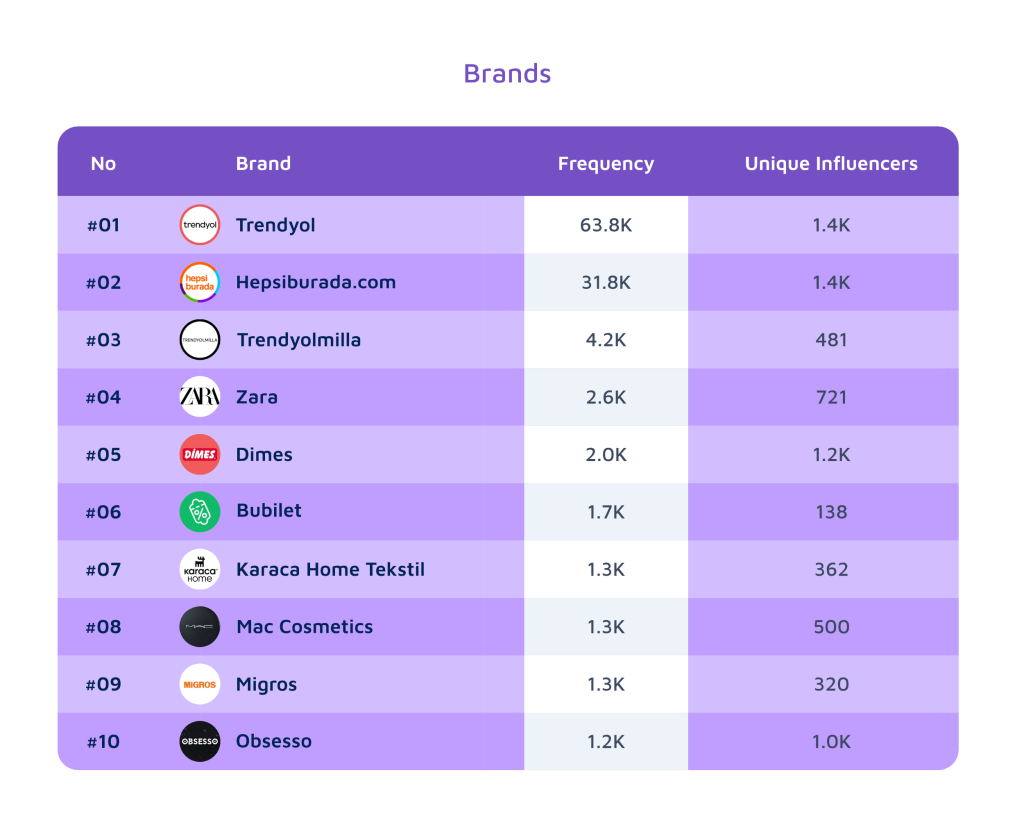
This further reinforces e-commerce’s position as the strongest brand touchpoint for influencers.
Other Notable Players: Food & Beverage and FMCG
Beyond e-commerce giants, Food & Beverage and FMCG brands also stood out through their extensive influencer networks and strong content visibility. Overall, the data indicates that the influencer ecosystem in Q3 was largely shaped by e-commerce and fast-moving consumer goods (FMCG) categories, where scale and posting frequency emerged as strategic levers in the visibility race.
Conclusion: The Importance of Data-Driven Influencer Marketing
Hyperiser’s insights reveal critical patterns, from the scale of e-commerce dominance to the broad reach strategies of FMCG brands and the clear strategic separation between sectors.
To execute successful influencer marketing campaigns, professionals must clearly understand their industry dynamics, interpret data accurately, and optimize their strategies accordingly. This requires both precise influencer analysis and a well-balanced approach to frequency and reach.
For deeper insights and customized industry reports, discover more with Hyperiser.